ABOL
The first pour.
The gathering begins.

Beans roasted. Coffee ground. A jebena warming.
In Ethiopia, coffee makes room for people. Traditionally, the same coffee grounds are brewed three times, adding fresh water for each round. Three rounds. Time together.
The first pour.
The gathering begins.
The second round.
The conversation continues.
The final round.
A blessing before we part.

Legend tells of Kaldi, an Ethiopian goat herder who noticed his goats becoming unusually energetic after eating red coffee cherries. Our goat is a nod to that story and to where it all began.
Coffee began in Ethiopia, long before lattes, chains, and global plantations.
It was part of something deeper: community, ceremony and connection.
Then coffee left Africa. Fertile beans were carried beyond the region, European colonial powers built plantations across Asia and the Americas, and coffee became a global commodity.
The world embraced coffee.
But somewhere along the way, its origins were slowly erased from the story.
And something else was lost: the ritual.
In Ethiopia, coffee isn't simply something you drink. It is something you make time for. Beans are roasted, ground and brewed as people gather. Traditionally, the ceremony unfolds through three rounds: Abol, Tona and araka. Each is part of the experience.
The modern world made coffee faster.
Ethiopia reminds us to slow it down.
Ethiopica exists to reconnect the cup with its roots.
Not to reinvent coffee.
To give its story back.
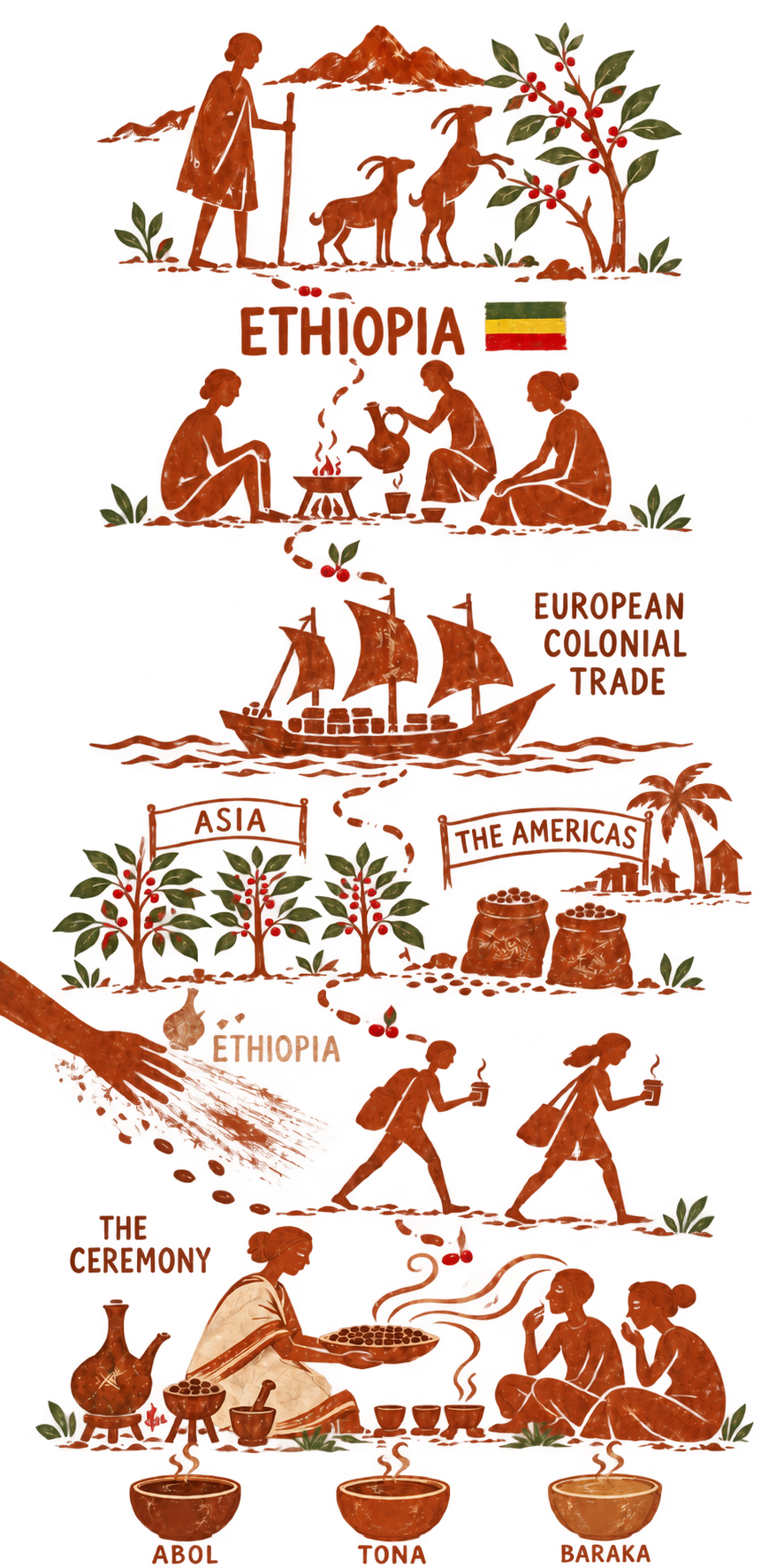
From Ethiopia to your cup.
Fikir & Romain
Founders of EthiopicaCOFFEE WAS NEVER
JUST A DRINK.
COME BACK
TO THE RITUAL.

Ethiopian coffee. Ethiopian owned.
Our ritual, shared with you.